The Saluki Today
The Saluki was first introduced into Britain in the late nineteenth
century, usually by Arabists, diplomats or high-ranking army officers,
who had received them as gifts from sheikhs. Interest in the breed was
also stimulated after World War One when servicemen brought back
specimens from the Middle East.
In 1923, the Saluki or Gazelle Hound Club was formed in the
UK and drew up a breed standard that was approved and adopted by the
Kennel Club. This set out in detail the attributes for which the Saluki
was developed and became the blueprint for good specimens of the breed.
It included the features of differing strains of Saluki found
throughout the Middle East. Accordingly, the height range and colour
variation permitted in the Saluki is greater than in any other breed,
reflecting the vastly different terrain over which the hounds
traditionally hunted, and the variously coloured sands and mountains of
the desert.
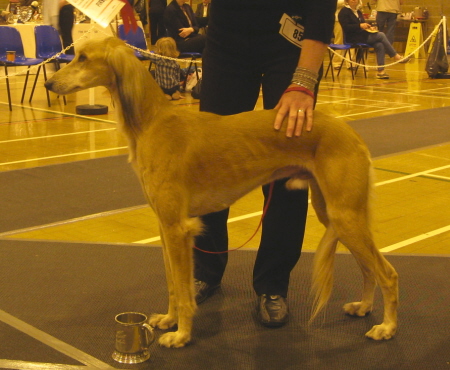
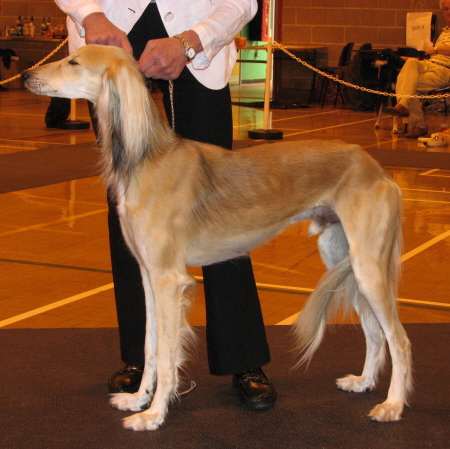
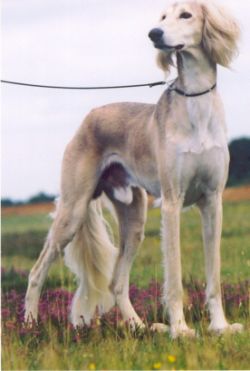
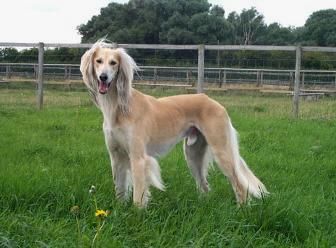
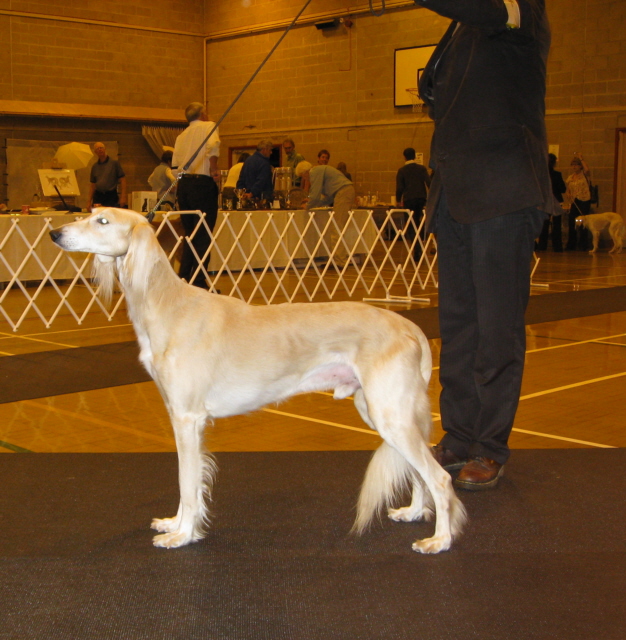
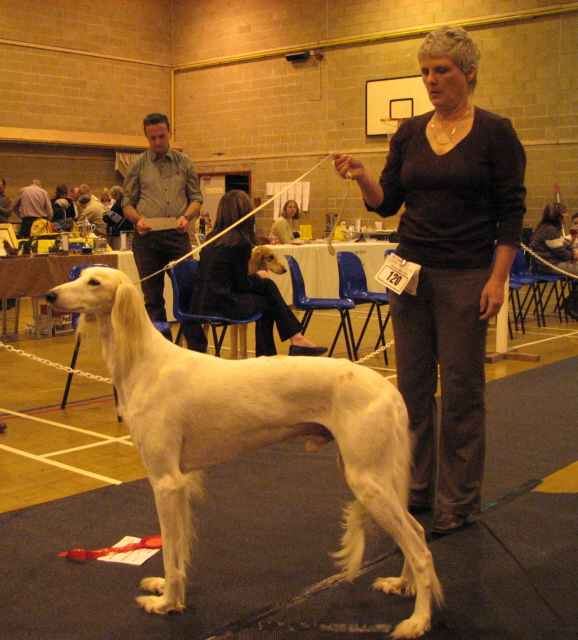
Height ranges from 23-28 inches to the shoulder in males, with bitches
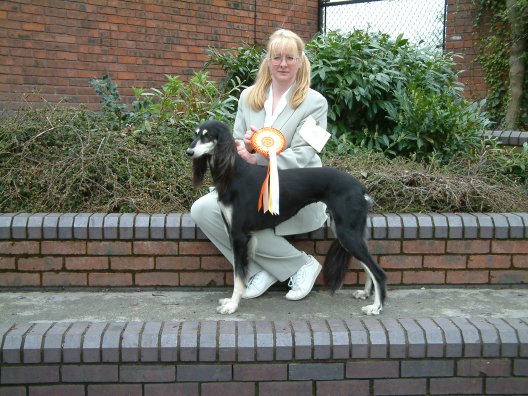
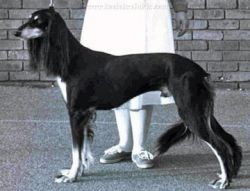
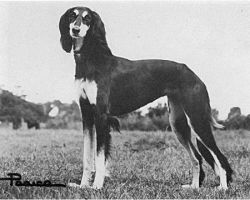
proportionately smaller. All colours from white, through cream, fawn,
gold, red, chocolate, black/silver, black/tan, tricolour (solid blacks
are not found), and particolour (white with any of the above colours)
are allowed, as is the grizzle coat pattern in which each individual
hair varies in shade from root to tip producing a mixture of colours.
This is not to be confused with brindle, which is disallowed in the
breed.
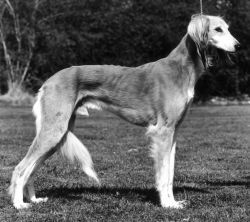
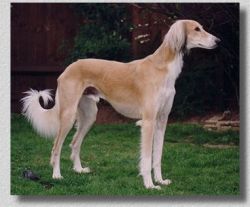
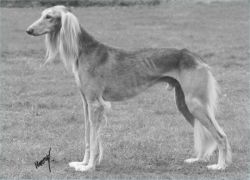
There are two coat types, smooth and feathered. The former has short
hair over its entire body, whereas the more common feathered variety
has long hair on its ears, legs and tail, and hair between its toes.
Interest in the breed increased after World War Two when there was a
further injection of desert bloodlines into the UK, and by the late
1950s the Saluki had become a popular show dog.
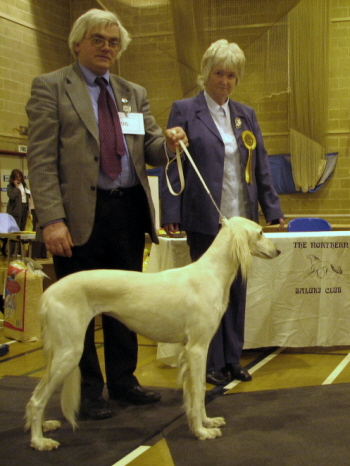
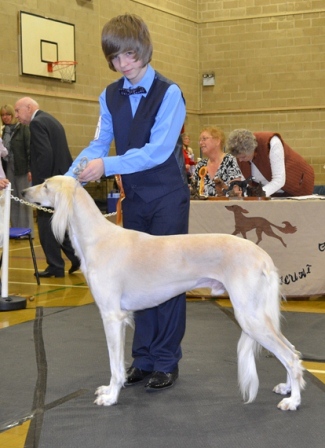
In 1978, the Northern Saluki Club was founded, having evolved from a
Northern Circle of committed Saluki enthusiasts, and has gone from
strength to strength.
Salukis are now popular in most developed countries, but with the
erosion of traditional Bedouin lifestyle throughout the Middle East,
they are on the decline there. While still used for hunting by some
nomadic tribes throughout the region, they are now kept primarily for
sport and as status symbols. Desert bred Salukis are still much sought
after and continue to influence bloodlines world wide.
The challenge for breeders in the West is to retain the character
of a breed whose custodians maintained it virtually unchanged for six
millennia. For this reason, hare coursing has been promoted by the
Saluki and Gazelle Hound Club since its inception and is actively
supported by some Saluki owners. In recent years, lure coursing -
chasing an electrically propelled rag around a zigzag course - has
become increasingly popular as a politically correct way of retaining
the Saluki's functional character.
@Copyright Helen Graham 2004
Origins
The Saluki or Gazelle Hound is considered to be the oldest pure breed of dog.
There is a mummified hound in Cairo Museum dated circa 3600BC
catalogued as 'the favourite hunting dog of the Ancient Egyptians'. It
is unquestionably a Saluki and is little different from modern
specimens of the breed. |
|
However, the Saluki is found everywhere throughout the Middle East.
With its speed and stamina, the Saluki was able to supplement the
frugal diet of the nomadic Bedouin tribes with fresh game and,
unsurprisingly, was viewed by them as a gift from Allah. Hence it was
distinguished from 'unclean' mongrel dogs and enjoyed special status,
sleeping in tents with women and children. The Saluki was not interbred
with other dogs, but kept pure, and its lineage carefully memorised and
passed on by oral tradition.
As their name suggests, Salukis were traditionally used to course the
Arabian gazelle, which is little bigger than the desert hares also
hunted by the Bedu. Working in pairs, Salukis gave chase to these
extremely fast and agile creatures, which were located by trained
falcons. Salukis stunned rather than killed their quarry by hitting
them at high speed. They then returned it to their masters and were
rewarded for their efforts. They fed themselves by catching less
exacting prey such as mice, jerboa and other small desert creatures,
including beetles. In this way, Salukis provided for themselves and the
tribes they belonged to.
Salukis are perfectly adapted to their function as pot fillers of the
desert. They are extremely hardy and resilient, as they have to be to
survive in hostile barren regions where daytime temperatures in excess
of 50 degrees celsius can drop to well below zero at night. Unlike most
breeds of dog, Salukis have only a single layer of coat. This not only
helps them to cope with high temperatures but also ensures that sand
and dirt does not adhere. Hunting in the desert takes place in the very
early morning just before the sun rises, or late in the evening, when
it can be extremely cold rather than merely cool. So, despite their
fine coat, Salukis cope well in cooler climates, as is evidenced by
their popularity in Finland and Scandinavia, where they love to run in
the snow.
The lithe muscular body of the Saluki carries minimal fat but they have
dense flat bone that is extremely hard and strong, so Salukis are
deceptively heavy and tough. Their far-seeing eyes are well lubricated
to flush out any sand not deflected by their long eyelashes, giving
them a lustrous appearance. The long usually well feathered tail not
only acts as a brake and rudder at high speed but also provides an
effective sand and wind screen when the head is tucked under it during
rest and sleep. Salukis also drink remarkably little water. For
thousands of years, the Bedu strove to keep them thus. In order to keep
the breed pure they maintained breeding records for generation after
generation, and the different tribes carefully preserved their own
strains of hound best adapted for local hunting conditions. Salukis
were rarely traded or given as gifts, and only then as a mark of great
honour.
Salukis were also the spoils of war. Crusaders returning from Holy wars
in the Middle East brought specimens into Europe. Salukis therefore
feature in many old European works of art such as paintings,
sculptures, pottery, tapestries, stained glass windows (notably in
Belgium) and coats of arms.
@Copyright Helen Graham 2004
Living with a Saluki
All Saluki owners quickly discover that the natural instinct of the
breed to chase prey at great speed and over considerable distances is
far from being lost. Salukis are designed to run, and run they must.
They take any opportunity to do so. Road walking alone is insufficient
exercise for Salukis. Yet once off the lead they can be in the next
county in seconds. They do not respect the confines of public places or
protocol, and will chase any moving objects, and often see small dogs
(and cats, of course) as fair game. Like most sighthounds, they can be
notoriously disobedient when off the lead, which presents problems
given that they can run all day. This quality makes them unsuitable for
many people.
A good-sized garden or secure, livestock-free exercise area is needed
by Saluki owners who want happy hounds and peace of mind. The fence
needs to be around six feet tall, as Salukis can easily clear five feet
from a standing start if they have a mind to, and some are remarkable
climbers. They are also enthusiastic diggers, and so fencing needs to
be sunk well into the ground. In the desert, where constantly shifting
sand fills the deepest holes in no time, this presents no problems, but
Saluki excavations of rose beds or lawns are not so easily remedied.
Keen gardeners cannot expect to enjoy Salukis unless they have some way
of keeping them well away from their horticultural endeavours.
While the great outdoors - the natural habitat of the Saluki - can
prove problematic for their owners, indoors Salukis are a delight.
Clean, virtually odour free, able to curl up in the smallest spaces,
disinclined to bark (if sometimes prone to howl), they are easily
accommodated, and should be kept as house dogs rather than in kennels.
Their affectionate, loyal natures and elegant good looks makes them
delightful companions, and their idiosyncratic character, quite unlike
any other breed, makes them an interesting talking point and wins them
many dedicated enthusiasts.
Although not technically a rare breed, only around 140 Salukis are
registered each year with the Kennel Club in the UK, so they are not
particularly common place. Prospective owners can expect to wait some
time before acquiring a puppy. Puppies should always be obtained from
reputable breeders, whose names can be provided by the Kennel Club or
the Secretary of the Northern Saluki Club.
@Copyright Helen Graham 2004